AC Installation & Replacement Services
Request an estimate for a new AC
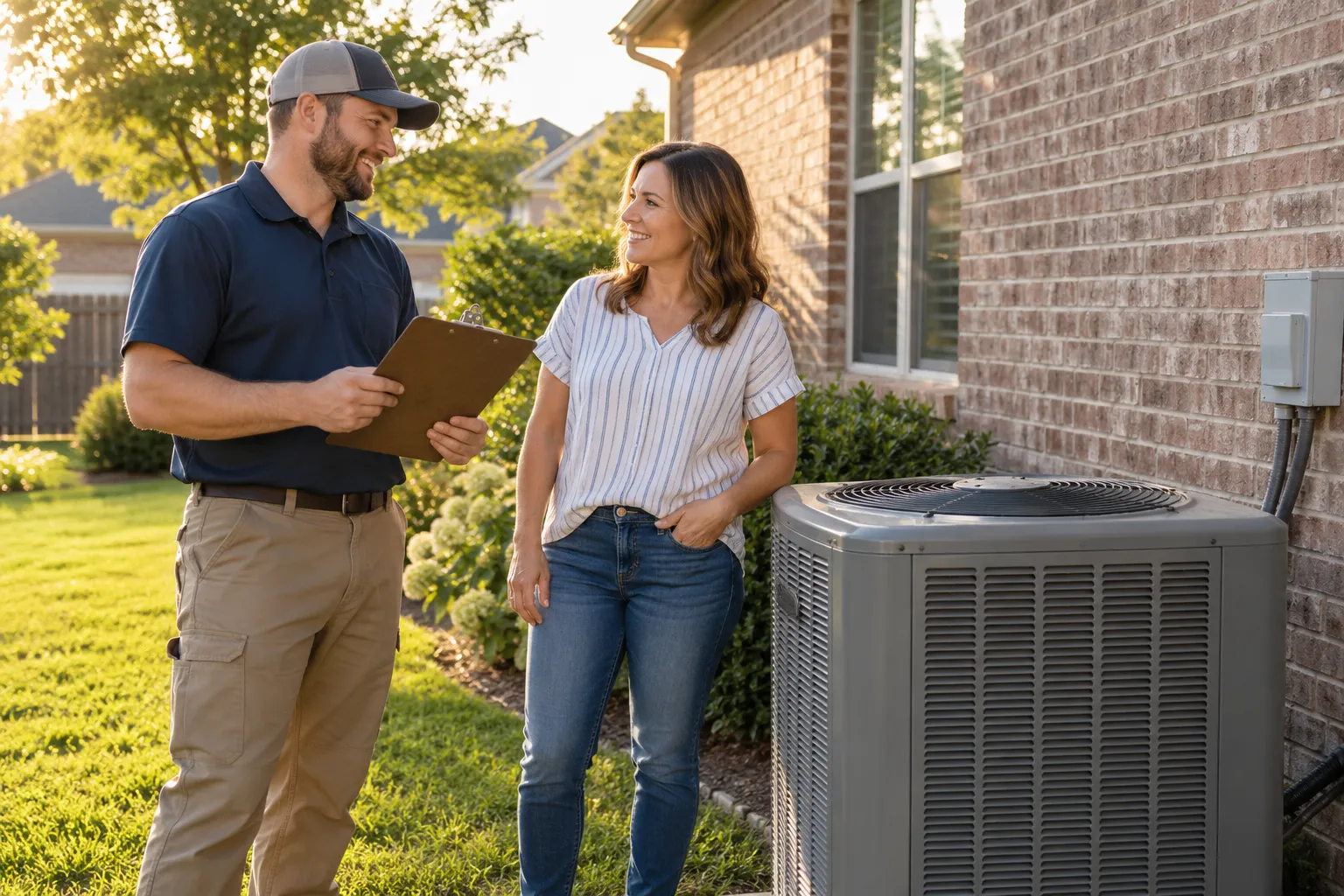
Picture coming home on a sticky July afternoon. The house feels heavier than the air outside. The AC runs and runs, but the rooms never cool. That is often when homeowners start thinking about a replacement.
Likelyplanet Heating & Air is a referral service. We do not install anything ourselves. We connect you with independent providers in our network who handle AC installation and replacement across the Lovejoy area. Tell us what is going on, and a local provider can look at your home, explain your options, and give you a written quote.
You can compare what each provider offers, ask questions, and take your time. There is no obligation to move forward, and you stay in control of every decision from the first request to the final choice.
Say your AC gives out in the first real heat wave
Picture this. It is a humid evening, the forecast says storms, and the air from your vents is barely cool. You flip the thermostat down. Nothing changes. The unit hums, but the house keeps warming up.
If that sounds familiar, you are probably asking one big question: fix it or replace it? If the house is unsafe or too hot to stay in, Request a callback to check provider availability. Many providers can respond quickly when the heat is serious. If you need emergency AC repair first, ask the provider to look at that before talking about a full replacement.
Is it time for a new AC?
A repair makes sense when the system is fairly young and the problem is small. Replacement starts to make sense when repairs pile up, the unit is old, or the repair quote is a big share of what a new system would cost.
Here is a simple test. Add up what you have spent on the AC in the last two summers. If the number keeps growing, a new system may be the calmer choice.
Signs your AC may be ready to retire
No single sign decides it. Look for a pattern:
- The system is around 12 to 15 years old, or older
- Energy bills climb even though your habits did not change
- Some rooms stay warm while others feel chilly
- The air feels sticky, even when the AC is running
- Loud rattles, buzzing, or frequent on-and-off cycling
- The system uses an older refrigerant that is getting harder to find
- Repairs keep coming back every season
A provider can check these in person and tell you what they see.
Before the season turns: why timing matters
In our part of the country, summers are long, hot and wet. Thunderstorms can knock out power and stress equipment. Remnants of tropical systems can bring heavy rain and sticky weeks. Every cooling system works hard here.
Say you notice weak cooling in late spring. That is a good time to ask about replacement. Schedules are usually more open, and you can compare options without a heat wave pressing on you. Wait until the first 95-degree week, and you may have fewer choices and less time to think.
Types of cooling systems
A provider may talk through a few common setups:
- Central split system: an outdoor unit and an indoor coil that share your existing ductwork. This is the most common choice.
- Heat pump: cools in summer and can heat in winter, which suits mild winters.
- Packaged unit: everything in one outdoor cabinet, often used where indoor space is tight.
- Ductless mini-split: wall-mounted units for additions, sunrooms, or homes with no ducts.
Each one has trade-offs in price, comfort and upkeep. Ask the provider why they lean toward one for your home.
Why proper sizing matters
Bigger is not better. An oversized AC cools the air fast, then shuts off before it can pull moisture out. In a humid climate, that leaves you with a cold but clammy house.
A system that is too small runs nonstop and still falls behind on hot afternoons. A good provider measures your home, checks the windows, insulation and ducts, and sizes the system to fit. Be cautious if someone picks a size just by matching the old unit.
What an AC installation includes
The exact list depends on the job, but most installs cover:
- Removing the old equipment and recovering refrigerant the right way
- Setting the new outdoor unit on a pad or stand
- Connecting the indoor coil, line set, drain and electrical parts
- Checking ductwork for leaks or damage
- Installing or updating the thermostat
- Testing airflow, pressure and cooling before they leave
Ask for these steps in writing so you know what the quote covers.
Matching the system to your house
Homes in this region vary a lot. An older mill-era house may have tight spaces, odd duct runs, or no ducts at all. A newer subdivision home may have a large attic unit and long duct runs.
Crawl-space homes often have ducts underneath, where moisture can cause trouble. Slab homes may have ducts in the attic or walls, which can run hot in summer. Brick and vinyl siding both affect how heat moves through the house. A provider who looks at your actual home can match the system to it rather than guess.
Efficiency in plain terms
You will hear the term SEER2. It is a rating of how much cooling you get for the electricity used. A higher number usually means lower running costs, but the equipment costs more up front.
Think of it like a car's miles per gallon. If you run the AC for many months a year, a more efficient unit tends to pay you back over time. Ask the provider to show you both the price difference and the likely yearly savings, in plain numbers.
Notes and photos ready
Say you take five minutes before the visit. Snap a photo of the nameplate on your outdoor unit and the indoor unit. Write down the model number, the age, and any repair receipts you have. Note which rooms run hot and what time of day.
Those small records help the provider quote accurately. If a storm or power surge damaged your system, take photos of that too. Some policies may cover sudden damage, so check your policy, and providers can often help document damage for a claim.
Questions to ask the provider
Bring a short list to your estimate:
- How did you decide on this size and type of system?
- Is the quote written and itemized?
- What does the equipment warranty cover, and what does the labor warranty cover?
- Will the ductwork be checked or sealed?
- Are permits included, and who handles them?
- How long will the work take?
- What upkeep will the new system need?
A clear provider will answer without rushing you. Compare more than one quote if you can, and choose the one that makes the most sense for your home.
What's Included
Home Assessment
A provider looks at your house, ducts, and current system to decide what size and type fit.
Old Unit Removal
The worn-out equipment is taken out and refrigerant is handled the proper way.
New System Setup
Indoor and outdoor parts are placed, connected, and wired to match your home.
Testing and Walkthrough
Airflow and cooling are checked, and the provider shows you how to use it.
Typical AC Replacement Costs
Prices in the U.S. vary widely by home size, system type, and ductwork condition. These ranges are only a general guide, so always ask for a written quote before work begins.
| Item | Typical range | Notes |
|---|---|---|
| Central AC replacement | $5,000 – $12,000 | Depends on size, brand, and efficiency |
| Heat pump system | $6,000 – $15,000 | Heats and cools; costs vary by type |
| Ductless mini-split (per zone) | $2,000 – $5,000 | Good for additions or homes without ducts |
| Outdoor unit only | $2,500 – $7,500 | Only works if the indoor part still matches |
| Ductwork repair or sealing | $500 – $2,500 | Varies by how much is damaged or leaking |
| Smart thermostat install | $150 – $500 | Depends on thermostat and wiring |
How It Works
Tell Us What's Happening
Describe your cooling problem and home through the estimate form, or Request a callback to check provider availability.
Get Matched Locally
Likelyplanet Heating & Air connects you with an independent provider serving your part of the Lovejoy area.
Review the Written Quote
The provider visits, measures, and explains the options so you can compare calmly.
Choose and Schedule
You pick the provider and a time that works. There is no obligation to proceed.
Why Call Likelyplanet Heating & Air
Plan Around the Weather
Starting before peak heat gives you time to compare options instead of rushing.
Independent Providers
Providers in our network are local businesses that do the work themselves.
Clear Next Step
Share your details once and get pointed toward a provider who fits your situation.
Organized Process
Simple notes and photos help you get quotes that are easier to compare.
Other Services
Need ac installation & replacement services in Lovejoy?
Send an estimate request, or email contact@likelyplanet.garden. Tell us what is going on, and a provider in our network can follow up with you.
No obligationAC Installation & Replacement Services FAQ
How do I know if I should replace my AC or repair it?
Age, repair history, and cost matter most. If the unit is over 12 years old and repairs keep adding up, replacement is worth pricing out.
How long does an AC installation usually take?
Many replacements take one to two days, though it depends on the system and ductwork. Ductless or larger jobs may take longer. Ask the provider for a realistic timeline in your written quote.
Will my homeowners insurance pay for a new AC?
Some policies may cover sudden damage, like a power surge or storm, but not normal wear. Check your policy, and keep photos and notes, since providers can often help document damage for a claim.
Reach a local provider
Send an estimate request, or email contact@likelyplanet.garden. Tell us what is going on, and a provider in our network can follow up with you.
No obligation